


The future of search is here, and it’s more dynamic, intuitive, and AI-driven than ever before. Google search is evolving with the addition of Google’s SGE which will provide AI-generated responses directly in the search results. As of now, it’s important to note that SGE is not yet universally available to all users.
Google’s Search Generative Experience (SGE) marks a big shift in the digital marketing landscape. SGE is reshaping how users interact with search results, and this will ultimately affect how businesses optimise their websites for search engines. This development is not just a technical shift but also a fundamental change in user behaviour and expectations.
How does SGE work?
Imagine posing a question to Google and receiving a direct, AI-generated response right in the search results, bypassing the need to visit a website. This direct engagement with search queries means that users are increasingly interacting with Google’s answers before they even consider clicking through to a website.
This emphasises the increasing importance for brands to align their online strategies with the evolving nature of search queries, which are becoming more conversational and intent-focused.
SGE’s Impact on SEO
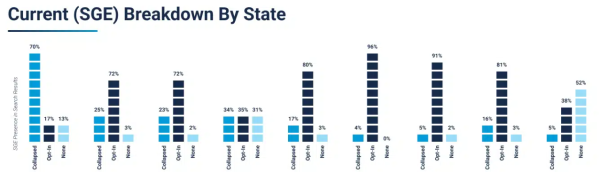
SGE’s influence currently varies across sectors. According to new data released by enterprise SEO platform BrightEdge, after analysis of one billion queries across nine industries, reveals that some industries were more affected than others. Here’s a breakdown of a few sectors:

Source: https://searchengineland.com/wp-content/seloads/2024/01/SGE-impact-by-industry-BrightEdge.jpeg.webp

The data shows that the healthcare sector has been most impacted by SGE, with 76% of search queries triggering AI-generated answers. This means SEO efforts must now also consider how to optimise content so that it is more likely to be used by the AI in generating responses. In contrast, industries like ecommerce and travel show different levels of interaction. This variation highlights the necessity for an industry-specific approach to SEO, tailored to the unique ways in which SGE is influencing search behaviours in different sectors.
Source: https://searchengineland.com/wp-content/seloads/2024/01/SGE-impact-by-industry-BrightEdge.jpeg.webp
As a reminder, there are three states of SGE:
- Collapsed is when a truncated AI-generated answer is shown.
- Opt-in is when users must request an AI-generated answer.
- None is when a query doesn’t trigger SGE.
Marketing efforts will need to focus more on visibility and engagement within the search results themselves rather than solely driving traffic to websites.
SGE’s Impact on PPC
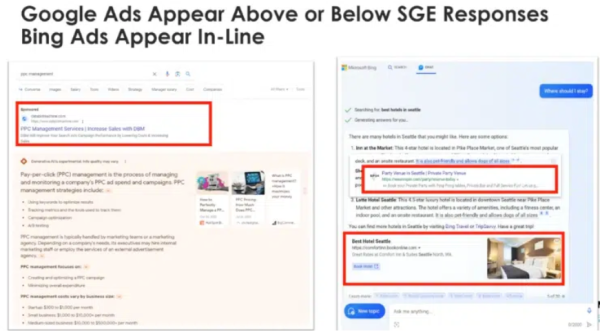
SGE is transforming PPC marketing by changing how ads are displayed and interacted with in search results. The presence of direct answers and prompts in search results challenges traditional PPC strategies. This might involve creating ads that are more informative and less sales-driven, offering value in a way that complements the AI’s responses.
Source: https://searchengineland.com/wp-content/seloads/2024/01/Screenshot-2024-01-16-at-21.03.30.png.webp
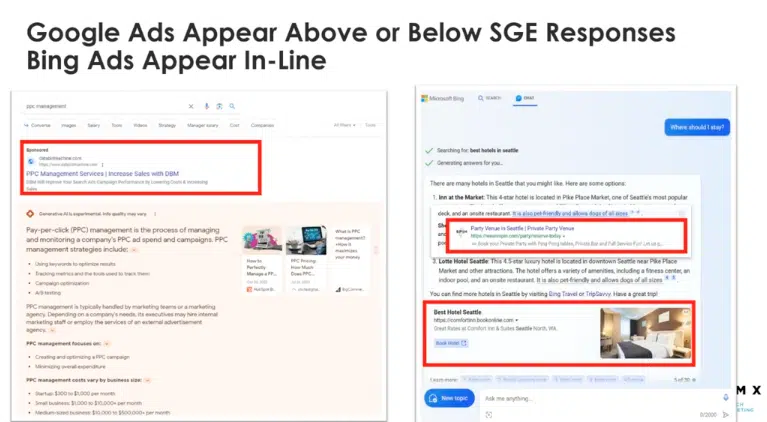
SGE’s goal is to seamlessly blend advertisements into the user’s search experience in a way that feels organic and conversational, steering clear of an overly salesy tone. The traditional approach of using direct call-to-action phrases might seem out of place within this more conversational format of search results.
Ads will need to be more than just eye-catching, they must be contextually relevant and offer value that enhances the user’s search experience.
Why We Care
Staying ahead of these trends is critical. The introduction of SGE represents both a challenge and an opportunity. Understanding these changes is essential for maintaining visibility and staying relevant in an evolving search landscape.
SGE’s impact on different industries requires a dynamic approach to SEO, this means adopting an approach that is finely tuned to the specific needs and behaviours of different industries.
Meanwhile, in PPC, the shift towards AI-driven user experiences demands a more integrated and adaptive approach to ad creation and placement.
By embracing these changes and rethinking strategies, we can navigate through this evolving landscape, ensuring continued success in the digital space.