


Google is rapidly shifting from directing users to websites to completing more of the journey inside its own search interface. AI Overviews now answer queries without requiring a click. Shopping happens through conversational queries in Gemini. Google is building travel itineraries inside Search. It can even call local stores, check stock, and book restaurants on a user’s behalf.
For SEO and digital teams, this changes the fundamentals: search visibility no longer guarantees traffic, and traffic no longer guarantees transactions. To stay competitive, brands must optimise for visibility inside Google’s AI-driven environment, not just on their own sites.
What the Data Says: CTR (Click-through Rate) Has Collapsed

Seer Interactive’s analysis, reported by Search Engine Land, revealed some of the steepest declines in search traffic ever recorded:
- Organic Click-through Rate down 61% when AI Overviews appear
- Paid Click-through Rate down 68% when AI Overviews appear
- Organic Click-through Rate is still down 41% even without AI Overviews
This marks a structural shift. Even when you hold your position, users no longer click through. AI Overviews and on-SERP answers intercept attention before users reach websites.
CTR is no longer a reliable measure of SEO performance; visibility and traffic have officially split apart.
And Google isn’t stopping there.
Google Is Absorbing More of the User Journey
Across shopping, travel, and local services, Google is embedding AI tools that reduce the need to visit a website at all.
Shopping
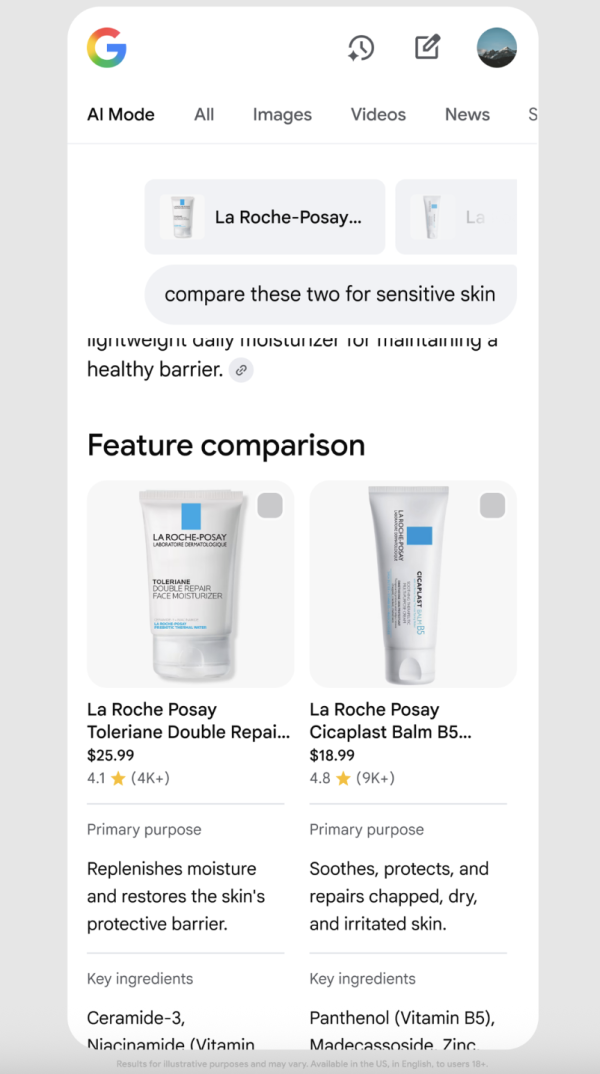
Google now handles far more of the product discovery process inside Search and Gemini. Its Shopping Graph, which includes more than 50 billion product listings, powers conversational recommendations that match users to items without traditional keyword searches. Users can set price-watch rules, authorise purchases, and even have Google call nearby stores to confirm stock, all without ever reaching a retailer’s website. This moves shopping from a click-driven journey to a guided, AI-mediated flow.
Travel & Experiences
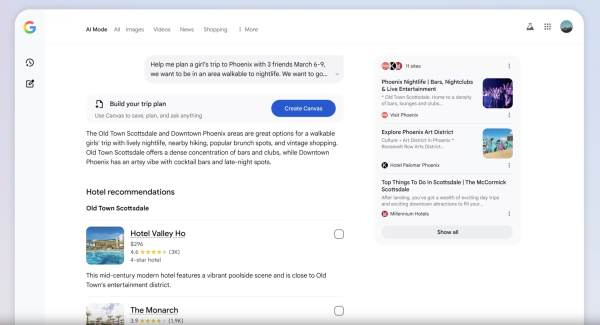
Travel planning is undergoing the same transformation. Google’s AI trip-planning Canvas can build complete itineraries, combining flights, hotels, and activities in a single interface. Tools like Flight Deals provide AI-powered destination suggestions across 200+ countries, while restaurant and activity bookings now happen directly on the SERP. As this becomes more integrated with LLM-powered planning, tourism businesses will face even greater disruption as fewer users rely on external sites to research or book travel.
Local Services
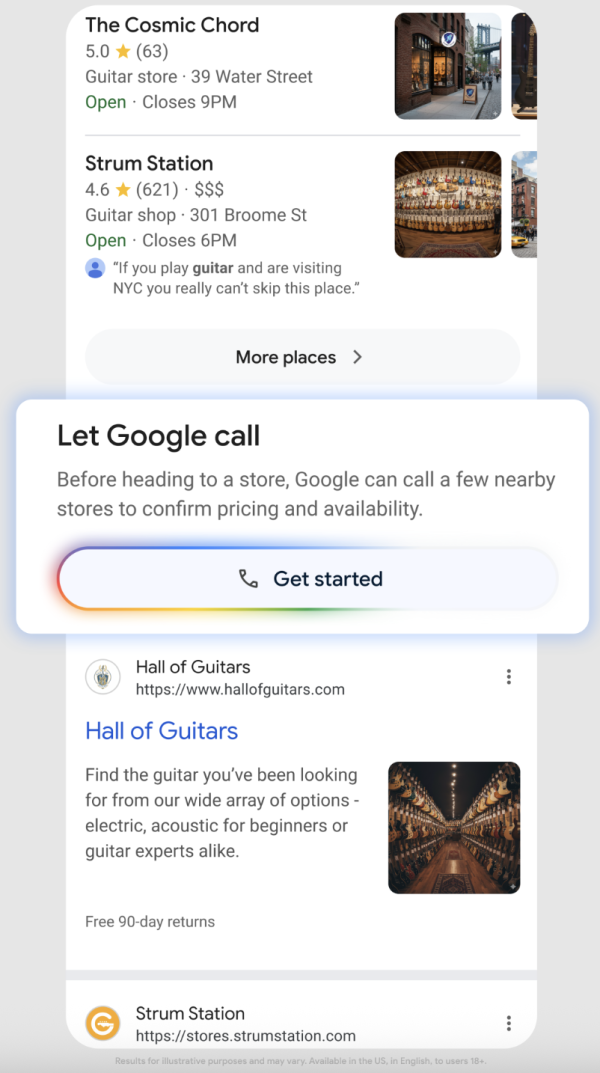
Local interactions are increasingly happening through Google as well. The platform can phone stores on a user’s behalf, confirm product availability, and return a clean summary inside the results page. Appointment scheduling for services such as restaurants, salons, and repairs can now be completed directly in Search. This reduces the number of touchpoints where a user needs to click through, shifting the entire experience into Google’s hands.
As Search takes on the role of researcher, verifier, and transaction agent, websites lose touchpoints that once drove discovery and conversion.
Google is shifting from the front door of the internet to the concierge of the internet.
What This Means for SEO & Digital Strategy
Google’s AI systems aren’t ranking pages; they’re selecting data, entities, and sources they trust.
To stay visible inside this new AI-driven ecosystem, brands must optimise for three things:
- How Google understands you
(entity signals + schema + consistent attributes) - How Google evaluates your data
(freshness + accuracy + completeness) - How Google can use your information
(feeds + structured content + integration)
Below are the strategic shifts that now matter.
Visibility Now Matters More Than Clicks
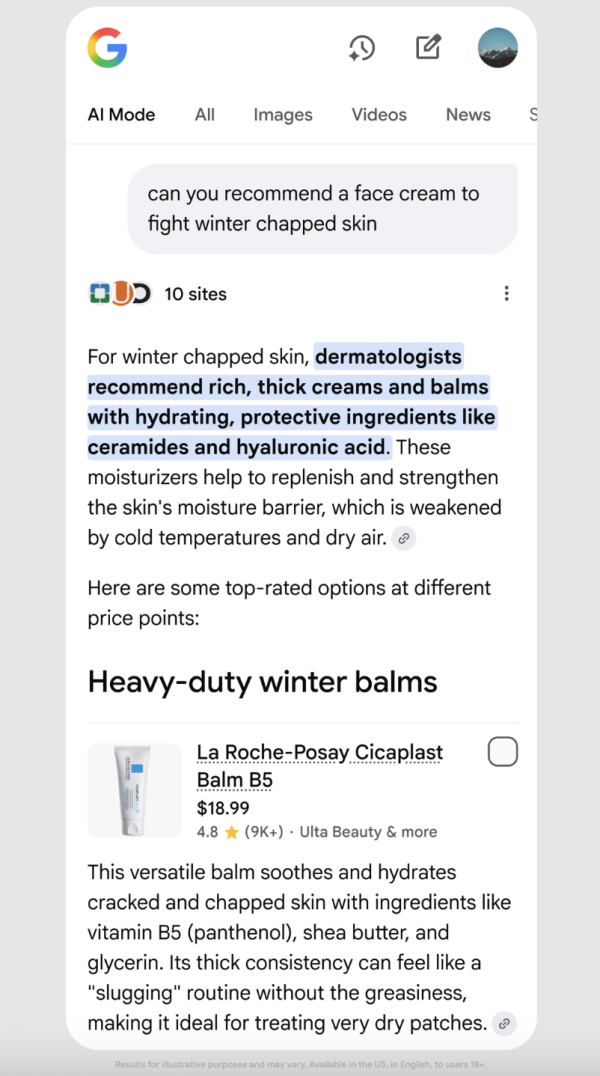
With clicks falling, being present in AI-driven surfaces is now the primary value driver.
Search Engine Land reported that brands cited in AI Overviews saw:
- 35% more organic clicks
- 91% more paid clicks
…despite the overall collapse in CTR.
This shows how AI citations are becoming a new ranking signal, not for the SERP itself, but for the user’s attention.
To increase citation eligibility, brands need to:
- Use structured content patterns that AI can scan and summarise
- Improve entity clarity across schema and key pages
- Provide definitions, steps, lists, and clean explanatory content
- Maintain accurate, complete markup everywhere
- Strengthen brand authority through trusted external mentions
Visibility now depends on whether Google’s AI can reuse your information, not just index your pages.
You Must Expand Value Beyond Site Traffic
Google is completing more intent-driven steps inside its own interfaces. Even when search volume holds, website visits will continue to decline.
To remain competitive:
- Treat product feeds like SEO assets
Google relies heavily on attributes, descriptions, pricing, and updates for shopping recommendations. - Perfect your local listings
Hours, attributes, photos, categories, and availability now influence AI-driven local actions. - Keep inventory and pricing fresh
These signals feed directly into Shopping Graph decisions. - Diversify your traffic mix
Email, direct, and social become essential buffers as Google reduces off-platform behaviour.
Google will increasingly control discovery. Your job is to dominate the value and conversion stages after the click, or without it.
Align With Google’s Transaction Layer
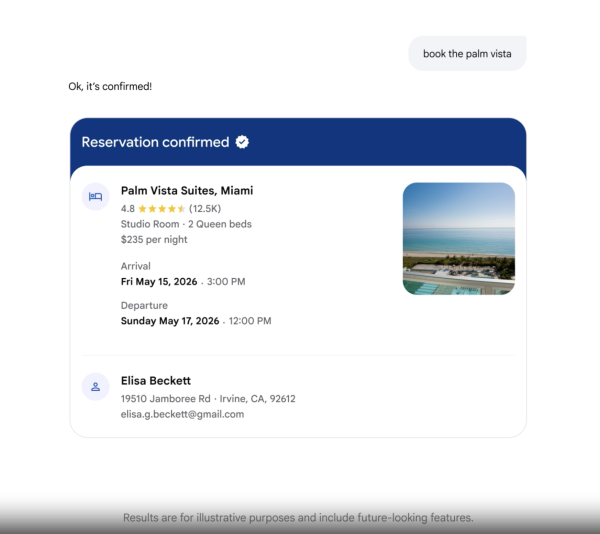
Industries like retail, travel, hospitality, and local services are experiencing the fastest disruption.
Google is now capable of:
- Planning trips
- Comparing products
- Checking stock and availability
- Making reservations
- Completing purchases
All without sending users to a website.
To adapt:
- Ensure your booking partners and integrations are Google-friendly
- Enable transaction tools like Google Pay where relevant
- Track conversions that happen inside Google
- Adjust attribution models to account for reduced referral traffic
- Optimise your data for selection, not just ranking
Google becoming the middle layer means you must integrate more deeply if you want to stay visible in intent-heavy queries.
Data, Feed & Integration Quality Now Drive Inclusion
AI shopping and booking rely entirely on structured data, not traditional content signals.
Google prioritises brands with:
- Clean, complete product feeds
- Real-time pricing and inventory
- Accurate attributes
- Complete Merchant Center metadata
- Clear business details
- Strong local information
- Consistent schema sitewide
Poor data quality doesn’t simply weaken SEO; it disqualifies your brand from appearing in Google’s AI experiences.
SEO has officially merged with product operations, local listings, and data consistency.
What to Do Now
- Audit impressions vs clicks
CTR is no longer reliable. Prioritise impression share, visibility, and entity presence. - Strengthen your entity profile
Cleaner schema, consistent naming, and authoritative mentions improve AI reuse. - Diversify your acquisition model
Email, direct, and social help offset declining referral traffic. - Integrate with Google’s ecosystems
Join Shopping Graph, agentic checkout, and booking integrations wherever applicable. - Upgrade your measurement model
Track visibility, brand recall, on-platform actions, and downstream conversions, not just traffic.
Why We Care
Google is no longer just directing users to websites; it’s completing the steps users once took on those sites. Search is shifting from a discovery engine to a task engine, where answers, comparisons, and bookings happen inside Google’s interface.
This change rewards brands with clean data, strong entity signals, and tight integration with Google’s systems. Those who maintain structured, machine-readable information will stay visible across AI Overviews, shopping flows, and booking modules.
Those who don’t may continue to rank, but lose customers to Google’s own AI-driven experiences.